Genres6 min read
Hip-hop: what it is and how to write a rap song
Where hip-hop comes from, how boom bap, trap and drill differ, what to listen for, and how to write a rap song with a hook people shout back.
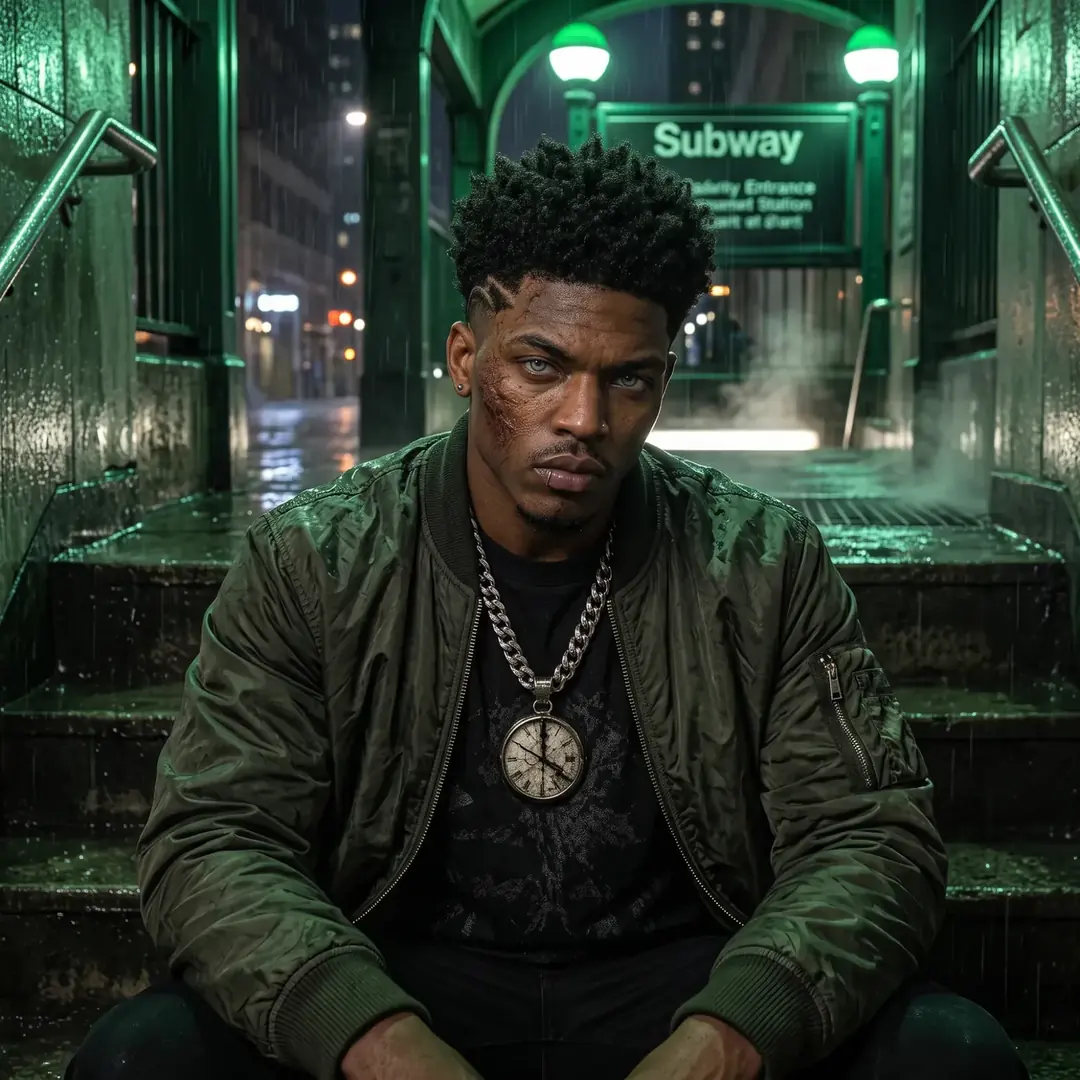
Hip-hop is a culture that started at block parties in the Bronx in the 1970s, and rap is its voice: rhymed words delivered in rhythm over a beat. If you want to know how to write a rap song, it comes down to three parts: a beat built from drums and bass, verses where you say something real, and a hook short enough for a whole room to shout back.
Vibnelo’s hip-hop hooks are listed under the article, hottest first.
Where hip-hop comes from
On 11 August 1973, DJ Kool Herc played a back-to-school party in the recreation room of 1520 Sedgwick Avenue in the Bronx. Dancers went wildest during the break, where a funk record drops to just the drums, so he played two copies and switched between them to stretch it. MCs started talking over those breaks to hype the crowd, and the talk turned into rhyme.
DJing, MCing, breaking and graffiti grew up together as the culture’s four elements. In 1979 the Sugarhill Gang’s “Rapper’s Delight” carried rap from the parks to the radio, and in 1982 Grandmaster Flash and the Furious Five’s “The Message” proved it could report real life. By the late 1980s Rakim was putting rhymes inside his lines instead of saving them for the end, and rap has been getting denser ever since.
Boom bap, trap and drill
- Boom bap is named after the sound of its kick (boom) and snare (bap). It is the New York sound of the late 1980s and the 1990s: chopped soul and jazz samples, dusty drums and a hard snare on 2 and 4, usually around 85–95 BPM. KRS-One put the name in a 1993 album title, Return of the Boom Bap, and Nas’s Illmatic (1994) is its textbook.
- Trap grew out of the American South in the early 2000s, Atlanta above all. The word is slang for a house where drugs are sold, and T.I. called his 2003 album Trap Muzik. The beat runs on long, tuned 808 bass, rattling hi-hats and a snare on beat 3, at about 130–150 BPM felt in half time.
- Drill started in Chicago in the early 2010s, with Chief Keef’s “I Don’t Like” (2012) as its breakout. London producers rebuilt it as UK drill, with sliding 808s and snares that land just off where you expect them. In Brooklyn, Pop Smoke’s “Dior” (2019), produced by East London’s 808Melo, made that sound a New York hit. It sits around 140 BPM in half time, cold on purpose.
What to listen for: tempo, flow and the 808
Nod along to the snare. In boom bap it hits on 2 and 4, so your head moves on every hit. In trap it lands once per bar, on 3, so your head nods at half speed while the hi-hats race above it. That gap between fast hats and a slow body is the trap feel.
- Flow is where the syllables land against the beat: on it, ahead of it, behind it, or in triplets, three syllables to a beat, the pattern Migos took mainstream on “Versace” (2013).
- Cadence is the rise and fall of the voice across a line, the shape you could still hum. In the pocket, a rapper sounds locked to the drums; out of it, they sound like they are reading.
- The 808 comes from Roland’s TR-808 drum machine. Its kick, tuned and stretched into a long note, became the bass of trap and drill: a low end that plays a melody and, in drill, slides between notes.
- Ad-libs, the short shouts behind the main vocal, fill the gaps and often become a rapper’s signature.
How to write a rap song with a hook people repeat
Most rap songs follow a simple map: an 8-bar hook, a 16-bar verse, the hook, a second verse, the hook again. A bar is one measure of four beats, and one line of rap usually fills one bar.
Write the hook first. Give it one idea in plain words, short enough to shout, and say it more than once: four bars performed twice is the classic 8-bar hook. Leave a gap for an answer, the way Jax Morrow’s “Keep the Lights On” answers its own title with “(Keep ’em on!)”. A hook built the same way:
Payday, payday (come on!)
Mama, put your feet up, I got the rent today
Payday, payday (come on!)
First time in a long time we ain’t counting change
The verses earn that payoff. Couplets (AABB) are the backbone; multisyllabic rhymes, or multis, match two or more vowel sounds at once:
Before: Mama says the rent is late, / I tell her that she has to wait.
After: Mama’s on the phone saying the rent is due, / I’m on the night bus with my back bent in two, / every check I ever cashed, I sent it through, / when I told her I would make it, I meant it too.
Every bar ends on the same three vowel sounds and adds a new picture. Internal rhymes go inside the bar as well: “I clock in, lock in, knock out the late shift” rhymes three times before the line is over. For the hook itself, see nine habits for a chorus people remember.
Songs to study
- Nas, “N.Y. State of Mind” (1994): dense internal rhymes and multis over a boom bap beat by DJ Premier.
- The Notorious B.I.G., “Juicy” (1994): a life story with a clear before and after, in a flow that sounds like talking.
- Lauryn Hill, “Doo Wop (That Thing)” (1998): rapped verses and a sung hook in the same song.
- Eminem, “Lose Yourself” (2002): long chains of multis and a story that builds into the hook.
- Migos, “Versace” (2013): the triplet flow, and a one-word hook repeated until it sticks.
- Kendrick Lamar, “Alright” (2015): a chant hook built on one plain promise.
How to stand out
- Write what only you could write. Your street, your job, the thing on your kitchen table. Details are the one thing nobody can copy.
- Find your own pocket. Copy a flow you love to learn it, then move it: start a beat later, drop a syllable, rest where others would rush.
- Keep one voice. Calm or loud, funny or cold, listeners should know it is you before the hook arrives.
- Start strong. Open with the hook or your best bar, not a long intro: on a feed, the first seconds decide whether anyone stays.
When the song is finished, drop the whole track into Hook Lab: it finds the strongest 30 seconds, and only that part is uploaded while the full song stays on your device. If you have bars but no song yet, the Voice world has a “16 bars freestyle” dare: up to 30 seconds off the top of your head over a Vibnelo instrumental. Then play the hip-hop hooks below; for hope under the beat, gospel hip-hop has its own page.
Questions people ask
What is the difference between hip-hop and rap?
Hip-hop is the whole culture that grew out of the Bronx: DJing, MCing, breaking, graffiti and the music made from them. Rap is its vocal part, rhyming in rhythm over a beat, though in everyday talk both words mean the same music.
What BPM is hip-hop?
Boom bap usually sits around 85–95 BPM. Trap and drill are programmed at roughly 130–150 BPM but feel half as fast, which is why the same trap song can be listed at 140 BPM or at 70.
How many bars are in a rap verse?
The classic verse is 16 bars and the classic hook is 8, though many newer songs keep verses to 8 or 12. To start, count four beats per bar and one line per bar.
Do I need my own beat to write a rap song?
Not to write it: practise over any instrumental you like. To release the song, you need the right to use the beat, so make it, license it from the producer or work with one.
What makes a good rap hook?
One idea in plain words, short enough to shout and repeated at least twice. Put the title on the strongest beat, leave a gap for an answer, and check that people can say it back after one listen.
 Until Tomorrow
 Ten and Two